One of the many longterm effects of climate change is the change in precipitation levels througout the globe. As the climate warms the IPCC has predicted the precipitation patterns will increase in areas of high rainfall and there will be a decrease in precipitation in areas that currently receive minimal rainfall. As the population increases and water scarcity is becoming a problem because of pollution and poor management the effects of global warming are going to become even more impactfull. Currently there are water conflicts throughout the global the worst occuring in developing nations like India and Africa. These are predicted to get worse and others are expected to develop as rain patterns continue to become more scarce in the areas that need them most. There is also concern with 1.5 million people under water stress, where their daily water needs cannot be met, and that number to be increasing with the effects of global warming. This is of great concern for the developing South especially because the developed nations of the global North are responsible for the effects of global warming and will be continuing to worsen the problem as the South directly suffers. Civil wars are expected to increase and violent conflict is expected to further hinder the development of the global South. Here is several articles that discusses this issue and c some of the current major water conflicts that are occuring today in relation to Sudan and Darfur and the Indian Ganges River.
http://www.globalpolicy.org/security/natres/water/2007/0316thirstier.htm
http://www.netwas.org/newsletter/articles/2005/09/2
http://internationalwaterlaw.org/articles/general/Rahaman-Ganges-Asteriskos.pdf
24 May 2007


21 May 2007
DDT is an important chemical to look at in its global use today for pesticide eradication in the war against Malaria. Here is an exerpt from an ethics paper on its use in Malaria control.
The history of DDT is extremely complex and politically connected. The chemical was developed in 1939 by Paul Muller who received the Nobel Prize for its invention as an insecticide.[1] It was used in World War II to combat typhus and malaria and was hailed as a miracle cure to diseases that previously had no such relief. In the
Much of the science that
DDT is dangerous because of its ability to bio-magnify. It is fat soluble and does not readily get released as waste. As one animal absorbs it, for example a fish through its gills, it stays there until another animal eats it that then absorbs all of it. The larger fish then absorbs all of the DDE in every little fish it eats which is then passed on up the food chain becoming more and more concentrated in the fat of each animal. For birds this is important because once a certain concentration is reached the DDE inhibits calcium absorption, and the eggshells are then too thin to support the parent birds. In the
The harm from bio-magnification is important not only where the chemical is sprayed but also globally because DDT has the ability to travel in the atmosphere. Because the chemical has a low volatility level a small percentage of it evaporates and then travels to as far as the artic where it is cold enough to condense.[8] Here the chemical can be bio-magnified in the food chain and reach humans and animals on the other side of the planet from where the chemical was sprayed. With the integration of DDE in organisms the effects are often long term and difficult to study. The most important aspect of the chemical impact is its overall harm to biodiversity. There is no way to know what organism it will harm or how, but regardless there are problems that arrive from the indiscriminate killing of organisms.
The human health risks of DDT are also complex. DDE and DDT are hormone-disrupting chemicals that can lead to immunological, developmental, and reproductive problems. There have been many studies done on humans trying to directly correlate prolonged DDT exposure to acute problems but like all carcinogens it is hard to create direct correlations to prolonged exposure because of the lack of study controls. In Tzaneen,
[1]
[2]Carson, Rachel. 1962. Silent Spring. Houghton Mifflin Company,
[3]
[4] Baird C, 450.
[5] Baird C, 445.
[6]
[7] Wiemeyer,
[8] Baird C, 414.
[9] Dalvis, Mohamed., Myers, Jonathan., Thompson, Mary Lou., Robins, Thomas., Dyerd, Silke., Riebow, John., Molekwa, Josef., Jeebhay, Mohamed., Millar, Robert., Krugerg, Phillip. 2004. “The long-term effects of DDT exposure on semen, fertility, and sexual function of malaria vector-control workers in
[10] Wolff, Mary., Toniolo, Paolo., Lee, Eric., Rivera, Marilyn., Dubin, Neil. 1993. “Blood Levels of Organochlorine Residues and Risk of Breast Cancer.” Journal of the National Cancer Institute. Vol. 85(8): 648-652, April.
14 May 2007
Chlordane awareness

Ever wonder what kind of chemicals are lurking around in the water and soil of your local streams and bays? Did you ever wonder how the the streams become so contiminated? The answer can most likely be found right outside on your lawns and gardens. Pesticide use is one of many contributors to soil contamination in many water streams. More specifically, chlordane is among the many chemicals that can be found at high concentrations in different parts of Tecolote Canyon. Tecolote Canyon is a nature park in San Diego, CA that is surrounded by houses, a golf-course and the University of San Diego. Chlordane is a pesticide that is highly toxic. It was prevalent throughout the 1980’s to kill off pests, ants and insects until it was banned from commercial use in 1988. Although, it has been banned for almost twenty years concentrations of chlordane can still be found in some places near home lawns and gardens. Chlordane sticks strongly to soil particles at the surface thus; it can stay in the soil for over 20 years and breaks down very slowly. Chlordane concentrations are highly variable in soil and sediments. In an effort to find more information about what parts of the soil sediments contain Chlordane, samples from varies locations were taken from Tecolote Canyon. The soil samples were then tested for chlordane using the ELISA method. The ELISA method of measuring chlordane samples provides a technique for using a uv-vis spectrophotometer to measure the absence of the chlordane in each sample. From this method, we were able to construct a calibration curve that provided values to use in an equation that ultimately provided a final concentration value in ppb for each solution. We found that chlordane was present in every sample taken from Tecolote Canyon. The samples had concentration values ranging from 5-1900 ppb. This is higher than expected considering that the half life of chlordane varies between 37 to 3500 days and the commercial use of chlordane as a pesticide has been illegal since 1988. The highest of these samples was from the northern region of the canyon below the community center and below the golf course. From the data, we found a correlation between chlordane and soil moisture. Thus, we can conclude that chlordane is present in higher conentrations in moist soil vs. dry soil. The correlation between soil moisture and chlordane also suggests that there is still chlordane coming into the canyon from runoff areas like the golf course and residential areas above the canyon. In conclusion, this should bring some awareness that we should always be aware of the chemicals we use so that we can save our environment and utimately save our selves.
Chlordane Still Present In Tecolote Canyon After Thirty Years Of Its Restricted Use
Tecolote Canyon is a Nature Park located on the northern side of the University of San Diego campus, it extends quite a ways up north past mesa college and it exists between homes, colleges, and golf courses. Back in the 1950's, a pesticide commonly known as Chlordane was used to fumigate fire ants, pests, and other small insects that were infesting the area. It took about thirty years after its extensive use for scientists to realize that this pesticide was more harmful than originally thought. Not only was it toxic to the environment and animals in contact with it, but it's persistence in the soil and sediment was high. This means that even after thirty years of its restricted use, Chlordane concentrations could still be present in high amounts in the soil.
Our goal for this project was to access the locations and concentrations of Chlordane throughout the canyon and to speculate as to where the possible sources for contamination were coming from (or still are coming from). Our class was split up among various parts of the length of the canyon and soil samples were taken from numerous locations near a creek that runs through the park. At each sampling site, coordinates were taken from a GPS system that allowed us to later plug these sites into Google Earth to get a better perspective of where each sample was coming from.

From Google Earth, were were able to pin-point each concentration value for Chlordane with its respective location within the sampling area. This was a very helpful method because from the aerial view, we were able to locate possible drainage sources that might contribute to a specific concentration at a site. The samples were taken into the lab and treated with a Chlordane Kit called ELISA that was able to help us measure absorbency values from each sample. From the absorbency values compared to a standard set of absorbency values for the chemical Chlordane, the concentration for each site was able to be calculated.
Most of the calculations led to fairly low concentrations respectively, however there were a few sites that huge concentrations in comparison to the other sites. One of these sites was located at the major drainage site of the golf course, which in fact made the most sense to us. Sadly, golf courses use many chemicals to treat their grasses without paying much attention to the environment surrounding them. The other high level that was found was located near the highway where a confluence of water was located. All surrounding drainage pathways led to this one small location where the water was just stagnated. Also, when discussing this site with the local park rangers, they had mentioned that the location for that was was where a large condo-complex had been built across the street within the past twenty years and they definitely would have been using lots of pesticides to create the garden area and pest control.
Our results were higher than we would have thought, but it really hits home to know that these chemicals really do exist many years after their use. On out part, only measurements about the soil were taken into consideration, but the immense wildlife in the area definitely plays a big role into the contamination as well. It is important to think about the long term effects when using toxic chemicals and how exactly the product is getting disposed of before using them. Lastly, I would just like to point out that our tests were only run for one pesticide that was banned in the 1980's, yet still today pesticides are being used worldwide to a greater extent and it is our responsibility to make sure that we are monitoring their detrimental effects and using them minimally.
Our goal for this project was to access the locations and concentrations of Chlordane throughout the canyon and to speculate as to where the possible sources for contamination were coming from (or still are coming from). Our class was split up among various parts of the length of the canyon and soil samples were taken from numerous locations near a creek that runs through the park. At each sampling site, coordinates were taken from a GPS system that allowed us to later plug these sites into Google Earth to get a better perspective of where each sample was coming from.

From Google Earth, were were able to pin-point each concentration value for Chlordane with its respective location within the sampling area. This was a very helpful method because from the aerial view, we were able to locate possible drainage sources that might contribute to a specific concentration at a site. The samples were taken into the lab and treated with a Chlordane Kit called ELISA that was able to help us measure absorbency values from each sample. From the absorbency values compared to a standard set of absorbency values for the chemical Chlordane, the concentration for each site was able to be calculated.
Most of the calculations led to fairly low concentrations respectively, however there were a few sites that huge concentrations in comparison to the other sites. One of these sites was located at the major drainage site of the golf course, which in fact made the most sense to us. Sadly, golf courses use many chemicals to treat their grasses without paying much attention to the environment surrounding them. The other high level that was found was located near the highway where a confluence of water was located. All surrounding drainage pathways led to this one small location where the water was just stagnated. Also, when discussing this site with the local park rangers, they had mentioned that the location for that was was where a large condo-complex had been built across the street within the past twenty years and they definitely would have been using lots of pesticides to create the garden area and pest control.
Our results were higher than we would have thought, but it really hits home to know that these chemicals really do exist many years after their use. On out part, only measurements about the soil were taken into consideration, but the immense wildlife in the area definitely plays a big role into the contamination as well. It is important to think about the long term effects when using toxic chemicals and how exactly the product is getting disposed of before using them. Lastly, I would just like to point out that our tests were only run for one pesticide that was banned in the 1980's, yet still today pesticides are being used worldwide to a greater extent and it is our responsibility to make sure that we are monitoring their detrimental effects and using them minimally.
09 May 2007
Dogs Pose threat to water
Do you have a Dog? If you do. Do you clean up after dog? After reading this article about how water gets contaminated from dog watse I thought it would great to let every know how important it is to clean up after your pets. Everyone knows that dogs can be dirty but it took science studies to determine how dirty and nasty they can be. Dog watse can generate disease-causing bacteria that can make people sick. Studies done in the last few years put dogs third or fourth on the list of contributors to bacteria in contaminated waters. Researchers have found that at some beaches, dogs help raise bacteria levels so high that visitors must stay out of the water. Several studies have found that roughly 40% of Americans don't pick up their dogs' feces (women are more likely to do so than men). That is a lot watse!.The environmental impact of dog waste went unrecognized for decades. Then scientists developed lab techniques to determine the origin of fecal bacteria contaminating water. One method is a variant of DNA fingerprinting. Another method looks at the antibiotic resistance of microbes from different species. This is a great article and I encourage everyone that has pets to read this. Among the most contaminated spots found were Stevenson Creek in Clearwater, Fla. , the four Mile Run in Arlington and Fairfax counties, Va, and Boise River in Boise.
08 May 2007
Constructed Wetlands
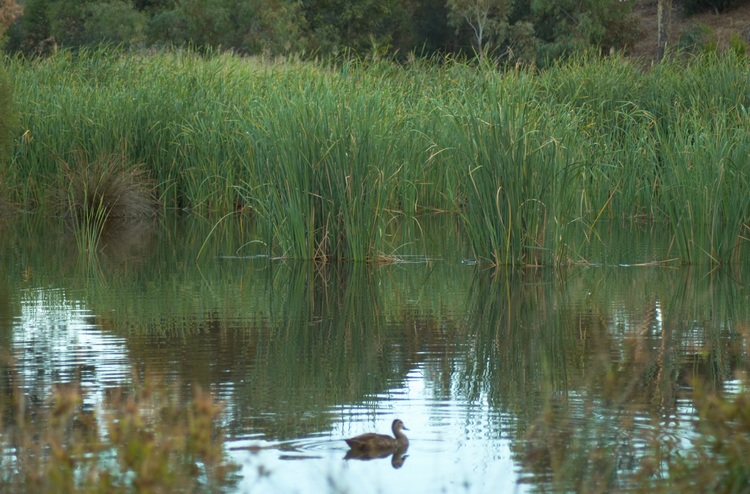
The section of the book on the processing of wastewater via an artificial marsh intrigued me to do some more research. There are two types of constructed wetlands: the subsurface - flow wetland and the surface - flow wetland. The subsurface - flow wetland transports sewage sludge through the sand to the roots of the marsh plants, while the sewage sludge in the surface - flow wetland travels above the soil. Also, there are many wetlands here in San Diego County, some of which are 'constructed' and not natural. However, the population in San Diego County is too large to have the wetlands serve as biological treatments for wastewater and sewage, which is why they were created mostly to serve as a refuge for migrating birds and to compensate lost estuarine habitat. Here is a list of the wetlands in San Diego County if anyone is interested.
06 May 2007
a Greener Apple...?


Apple has long been praised for generating products with a sleek, clean, modern design...so why doesn’t its company follow suit with respect towards its generation of "iwaste." On May 2, 2007, a bit more recent than the Clinton era ;), Steve Jobs vowed to clean up Apple' act. Apple's website now boasts it Green Apple logo and a list of improvements that will be taking place with respect to lessen its impact. These reductions include the complete phase out of lead in their computers as well as other toxic heavy metals such as cadmium, arsenic, mercury, and hexavalent chromium. The E-waste from large computer and cell phone manufacturers is gigantic. In areas of countries like China and India, computer parts and wastes are dumped in open fills where their breakdown can be slow and release these heavy metal components into the soil and ground water which can have noxious effects on the surrounding populations. Apples has also stated that by the end of 2008, they will end the use of PVC and and BFR's (Brominated Fire Retardants)--both which upon incineration can release bromine and chlorine compounds into the air. The Apple site and well as Greenpeace have picked up on this initiative by Jobs and have great full coverage. Please Visit http://www.apple.com/hotnews/agreenerapple/ or http://www.greenpeace.org/apple/ for more information.
03 May 2007
Water related Stresses of East and South Africa.


Eastern and Southern Africa (especially the Horn) have been recently been under great pressure from contamination in the welled drinking water. In these arid regions, water is obviously an extremely precious finite resource, which must be managed properly, or else great numbers of people will face imminent death. Africa's wells have recently been experiencing contamination by the microbe Vibrio cholera, a bacterium that causes Cholera. They symptoms of Cholera are dehydration, headache, stomach cramping and severe diarrhea. If a person goes untreated with various batteries of antibiotics, this bacterial infection can run havoc on your digestive system and cause death. UNICEF, a leader in humanitarian aid and Global health has identified Cholera contaminated water as an epidemic that must be fought. Stagnate conditions of water holes, combined with the equatorial heat, can turn these water sources into incubators for this microbe. UNICEF provided over 10 million dollars in recent years to work with officials in populated areas to help enact filtration methods to clean water sources, but much work is still needed. To Read more visit :http://www.unicef.org/har07/index_37421.htm
30 April 2007
Perchlorates & Hypothyroidism
Elevated levels of perchlorates in drinking water has been suggested to cause hypothyroidism by directly stopping the thyroid's ability to absorb iodine from the bloodstream, which regulates hormones in the body. I happen to have had hypothyroidism for 7 years and after reading this article began to wonder if I had been exposed to high levels of perchlorates in drinking water or during fetal development. (I know that sounds crazy, but when you randomly are diagnosed you look for answers.) It turns out the states that I have lived in and my mother lived in during my fetal development all are affected areas that do indeed have high levels of perchlorates in drinking water. If you want to find out more about perchlorates visit this website, which has a TOX GUIDE.
25 April 2007
Bottled water vs tap water
Ever wonder whats in water? it may seem simple enough. I mean water is water right? does it matter where it comes from? or does it matter what type of bottle you pick up at the grocery store? and even better question is, is bottled water better than tap? these are very important questions that everyone should ask themselves when consuming water. In 2004, 24 gallons of bottled water was consumed by Americans, making it second only to carbonated soft drinks in popularity. Furthermore, the consumption of bottled water is growing every year. This year, Americans will spend around $9.8 billion on bottled water, according to the Beverage Marketing Corporation. According to the BMC, the cost for bottled water exceeds the price of gasoline, depending on the brand, it costs 250 to 10,000 times more than tap water. According to this article that I read in the NY Times, tap water is much more monitored than bottled water therefore should be better.They stated that reseachers found more contamination in the bottled waters vs tap. Thus, bottle waters do not necessarily mean better water.If this is the case why do more people drink bottled waters? The article, does a good job at answering this question of why bottled water has become popularized? I think that it comes down to what each of us prefer. I personally like to drink bottled waters just because they are easier to use and I think that they taste better. What do you prefer? If you prefer bottled waters too and are interested in finding out about the water you drink I found a site that does a good job at describing how the water is obtained for each of the leading brands of bottled water. The site provides a quality assurance that most water is of good quality. but who knows...
23 April 2007
San Diego Landfills
After reading chapter 12, I was interested in finding more information on where all our trash goes and how it effects us. I found the site containing info about landfills here in San Diego County. I thought it was a good site because it talks about the current, future, and closed landfills. More importantly, it outlines the exposures from the closed landfill Poway. While investigating the extent of low concentration solvent (PCE and TCE) contamination in ground water within the closed landfill boundary, very low levels of benzene and solvents were found.Benzene is the compound causing much concern because at low levels benzene can be carcinogenic. There has been no actual confirmation of exposure to benzene and other chemicals. The exposure was said to be more harmful long term but that wont be known until more samples and studies are done. I found it interesting that there was not more information known about the sources of Benzene. So, for those of you who might live near a landfill this site provides a lot of information on how to stay informed and safe from exposure.
Portland Watershed Restoration
The Portland Watershed and Willamette River is one of the polluted areas highlighted in our text. This are is part of the Port of Portland that was heavily polluted in the 1970's and 1980's. I have been hearing warnings of pollution and contamination in the river my entire life growing up near the city. It is nice to see that there is action being taken now to clean up this contamination in a manner that does not merely place a band aid on the wound. The government action that is being taken in Portland in response to this large contamination is a great model for other cities to follow.
City of Portland Adopts and Funds Watershed Management Plan
By Bob Sallinger
Warbler June 2006
On March 8, 2006 the Portland City Council adopted an innovative Watershed Management Plan that holds within it the potential to set the City on a course towards ecological sustainability. In Late March the Mayor presented a preliminary budget that underscores the City’s commitment to on-the-ground implementation of this plan. At a time when comprehensive environmental planning all to often falls victim to short-term political considerations, back-door compromises, and inconsistent follow-through, the City of Portland has demonstrated a steadfast commitment to restoring a landscape that nourishes both humans and wildlife and which preserves a legacy of green for generations to come.
In his Report to the Park Board, Portland Oregon, 1903, John Charles Olmsted wrote “Marked economy may also be effected by laying out parks, while land is cheap, so as to embrace streams that carry at times more water than can be taken care of by drain pipes. Thus, brooks or little rivers which would otherwise be put in large underground conduits at enormous public expense, may be attractive parkways.” More than a century later, the City of Portland has taken these prescient words to heart. The Portland Watershed Management Plan presents a vision in which stormwater is treated as an urban amenity rather than obstacle to progress. By simply recognizing that rain is best addressed where it falls rather than by piping it to someplace else, the City has committed itself to a new way of thinking with profound implications for the ecology, economy and livability of our urban landscape.
The Management Plan sets four watershed health goals for the City: improvement of hydrology, water quality, physical habitat and biodiversity. Based upon nearly a half a decade of work and a small mountain of scientific data, the plan ultimately does two things. First it models the entire urban landscape to determine how best to accomplish these four objectives in any specific location. The City now has a scientifically credible process for determining how to spend limited funds to best accomplish its environmental goals. Second, and perhaps more importantly, the Plan commits the city to considering and incorporating where possible watershed protection and restoration principles at the planning stage for all city projects. The Plan recognizes that the least expensive and most effective way to restore the landscape is to do things right in the first place rather than retrofitting after environmental regulations such as the Clean Water Act and the Endangered Species Act have been violated. This plan breaks down oft-criticized bureaucratic silos and makes environmental protection the purview of all city agencies.
The plan envisions an urban landscape in which problems such as flooding, water pollution, urban heat island effects, and lost of species diversity are addressed by reintegrating nature into the landscape. This includes not only traditional strategies such as the protection of parks and natural areas, but also a proliferation of street trees, ecoroofs, vegetative swales, rain gardens, vegetated curb extensions and the like.
The watershed approach makes economic sense. Commissioner Sam Adams, speaking before the Bureau of Environmental Services Citizens Budget Advisory Committee, noted that if we had implemented these types of projects thirty years ago, the city might very well not be spending $1.4 billion dollars today to address the combined sewer overflows (CSOs) that have turned our urban waterways into cesspools. If we fail to implement these types of projects now, the “big pipes’ that we are installing today will become obsolete within a few generations saddling our children and grandchildren with an even greater liability. The Portland city council signaled its recognition of this fact by not only holding the Portland Watershed Services Program Budget stable during 2006 but also creating a $500,000 Watershed Investment Fund to promote increased project implementation during the next year.
This plan is already more than simply aspirations on a page. Years of pilot projects have demonstrated that these projects make economic and ecological sense and simultaneously improve the livability of our City. To learn about projects already completed to date go to www.cleanrivers.org and view the 2005 Portland Watershed Annual Report. What the adoption and funding by city Council have done is ensure that these types of efforts will become the norm rather than the exception. Kudos to the BES Watershed Services Program, all the participating bureaus, the Portland City Council and myriad citizens who helped see this plan through to adoption.
http://www.audubonportland.org/conservation_advocacy/urbanconservation/watershedplan
17 April 2007
Taking Care of our Environment
I know that our discussion on carbon footprints is done, but I could not help but blog about a New York who is trying to leave no environmentally dangerous impacts in his everyday life. He began his experiment earlier this year with his wife and young child in the heart of New York City and blogs a few times a week about his actions and conflicts that arise. Reading his blogs is interesting because it relates back to class and has a reality T.V. vibe. So if you are captivated by reality T.V. ( I think we really all are:) check this out!
16 April 2007
Agent Green and the US war on Drugs

Since 2000 under the Clinton administration, the US department of Agriculture was working with Colombian government officials in order to institute and implement a plan of blanket spraying 1000's of acres of rainforest in order to kill Coca (cocaine producing) plants. The main chemical being used was glyphosate, more commonly known as "roundup", which was blanketed over high yield areas in the dense Colombian rainforest. Although these areas are said to be uninhabited, it was common knowledge that not only indigenous tribes lived in these areas but also small villages existed which housed the various growers (by the way those kids are standing next to a coke plant). Because of the potential to inadvertently harm innocent people, and much to the tone of Silent Spring, the Colombian government worked to identify a natural fungus that is harmless to people but is a natural herbicide and killer of the coca plant. The fungus, Fusarium oxysporum, is being tested by the US for use and apparently is quite indiscriminate in its damage killing all types of plants. Despite its low specificity, Agent Green's use is being lobbied in both Colombia and the United States and is probably going to be used. To Read More Visit :http://www.americas.org/item_294
15 April 2007
DDT is not linked with Breast Cancer
Every year 1 out of 8 women get breast cancer. Although, the number of cases of women being diagnosed with breast cancer has decreased since the 1980's, breast cancer continues to be the second leading cause of cancer death in women, exceeded only by lung cancer. Since the 1990's there has been much controversy concerning whether or not Breast cancer was linked to the use of DDT. There have been many studies done early in the 1990's that suggest it was but more recently I found some new articles that conclude that DDT is not linked with breast cancer. I found this very interesting because I wasn't aware of these new studies. In an effort to increase awareness of Breast cancer I thought that this information was important. More importantly, the decreases in deaths of breast cancer are the result of earlier detection and improved treatment. Breast cancer affects every one in one way or another. So I encourage everyone to do breast self exams. Here is a link about how to do one if you already dont know..
06 April 2007
World's Dirtiest Citites
Forbes recently published a list of the dirtiest cities in the world and the U.S. Interestingly, the dirtiest cities in the world were mostly due to heavy metal pollution, especially lead, and were concentrated in the former Soviet Bloc. The dirtiest cities in the U.S. are right in our backyard: California! For more information and some pictures of the polluted cities visit: FORBES.
30 March 2007
Methylmercury Toxicity

Did you know the EPA has been warning pregnant women about fish consumption? Or that methyl mercury accumulates in your hair -- giving analysts a simple way to get a sample to test? A Chemical & Engineering News article summarizing mercury toxicity was published in early 2004: go to http://pubs.acs.org/email/cen/html/033007161508.html to read more. One last factoid: the Dartmouth College professor who died after exposure to a drop of methylmercury had no symptoms for 5 months after the exposure.
27 March 2007
MInimata Disease
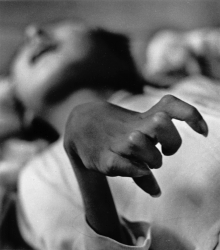
I was disappointed in the lack of material presented about the mercury poisoning in Minamata, Japan during the 1950s. The authors of the textbook even claim, "the poisonings at Minamata must surely rank as one of the major environmental disasters of modern times", but don't quantify the disaster. According to Japan's Ministry of the Environment, "2,265 individuals in Minamata and the surrounding area have been inflicted with mercury poisoning from the discharge of industrial waste water and 10,000 individuals are being compensated for their exposure and loses". Not to mention, the Japanese government and the Chisso corporation responsible for the mercury industrial waste have paid billions of yen to dredge the sediment containing the mercury and also to develop education programs about mercury poisoning. The picture really shows the horrible crippling that the body undergoes when exposed to toxic levels of methylmercury.
21 March 2007
Oh no, no mo Rice!

I was struck in Chapter 8 when I read that there was an increased incidence of pulmonary adenocarcinoma (lung cancer) in Chinese women due to prolonged exposure to cooking-oil fumes. There have been numerous documented stories and research which has affirmed the presence and contribution of Polynuclear Aromatic Hydrocarbons (PAH's) to this phenomenon. This really hit home for me not only because of my love on chinese food and general concern for those who prepare it, but also my love of cooking. Have I been over exposing myself to high levels of PAH's in cooking oils and products all in search of that one delightful recipe? According to published work, the answer is yes. Although the names of the brands of synthetic oil were not revealed in these studies, the respirable cooking oil particulate is quite dangerous and prevalent. Ways to prevent high exposure are to take such cautionary measures such as working in well ventalated areas and to always cook with the blowfan on. Also whenever possbi;e try to avoid high oil temperatures because this serves to increase the amount of oil PM. For more, read this; http://www.ncbi.nlm.nih.gov/entrez/query.fcgi?cmd=Retrieve&db=PubMed&list_uids=8161241&dopt=Abstract.
20 March 2007
Plant Buddies
Rachel Carson mentioned a case study in Holland, in which city workers planted marigolds in rose beds to successfully diminish nematode destruction. As a young girl, I remember visiting my grandparents' vast garden, which was surrounded by marigolds. Until just a few minutes ago, I had no idea that they planted them there for the safety of their flowers and vegetables. Marigolds, like many herbs, have strong odors that keep rabbits away and also aphids, little bugs that feed on vegetation. Not to mention, they do the job of an herbicide without the danger of using chemicals and introducing foreign species into an area. In an article from Flower & Garden Magazine, many other 'plant buddies' are mentioned and I think that you should take a quick glance.
Subscribe to:
Posts (Atom)